
Written by Jaylee Cox with the support of the DAC team
Disability has historically been widely ignored in mainstream fashion, with little representation on the runways or in designer collections. This neglect echoes the broader cultural attitude toward disabled people in the public eye. Individuals like Aimee Mullins challenge these standards and have brought this inclusive issue to light in the fashion world.
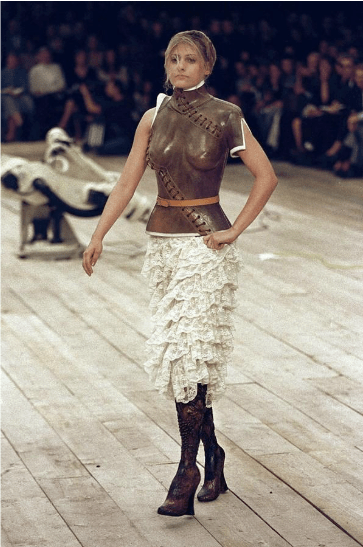
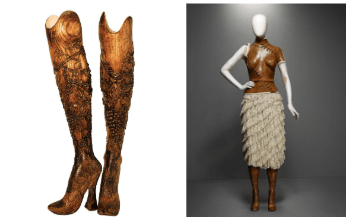
Mullins is an athlete, model, and advocate who became Alexander McQueen’s ‘muse,’ a well-known British fashion designer remembered for his dramatic fashion shows and creativity in designing clothes that combine tradition and contemporary style. She is well known for displaying her prosthetic legs through an artistic lens on McQueen’s runway. Mullins’s TED Talk, My 12 Pairs of Legs, her thoughts presented in Fashionista (2018), and her walk on the runway in the 1999 McQueen fashion show were necessary acts that changed cultural perceptions of disability in the fashion industry––they increased visibility of disability in the world of high fashion. Subsequently, adaptive fashion has turned into a massive movement within
the industry. The purpose of adaptive fashion––clothing designed with disabled individuals in mind––is to empower consumers and go against traditional standards of beauty.
Adaptive fashion’s origins are rooted in the absolute need for practical clothing options for people with disabilities. However, these designs are constantly disregarded in the fashion world and are often limited to companies targeting the disability market, like those selling products through medical catalogs––publications focusing on functional items for the medical community, such as adaptable clothing and mobility devices. Thankfully, mainstream brands have begun introducing adaptive collections within the last decade. For example, Tommy Hilfiger released a line of adaptive clothing in 2016 with magnetic buttons and practical designs that were fashionable yet accessible. Many journalists have recorded the influence of adaptive fashion in publications like Vogue and the Fashion Law Journal, which underscore how these designs are not simply functional but are fashionable with the times. Regardless of the advancements being made, the fashion world still needs to curb limitations like the high cost of production, the narrow demographic, and the lack of representation in social media, which are slowing down the progress of adaptable designs being accepted in mainstream fashion.
Adaptive fashion can alter the public’s perception by normalizing diverse body types. Alice Wong, a disabled activist and writer, highlights in her book Disability Visibility how significant and influential representation can be in all parts of society, not excluding fashion. Featuring disabled individuals as models and social media influencers offers an impactful message of inclusion and dismantling previous stereotypes of abilities and appearances. Social media platforms like TikTok have become powerful mediums to send this message. Influencers like @bydestinypinto advocate for adaptable fashion and started a fashion line for individuals who use medical devices, and @samyra constantly challenges well-known clothing brands by sharing how these companies profit off the integration of plus-sized messages but rarely carry these sizes in store.
Adaptive fashion focuses on the functionality and accessibility of the clothing through creative design features, including but not limited to:
- Magnetic Buttons and Velcro Closures: These replacements for traditional clothing closures make dressing easier for individuals with limited movement abilities.
- Stretchy Fabrics and Adjustable Hems: These features accommodate varying body types and help provide ultimate comfort.
- Seamlessness: Lowers the irritation and discomfort felt by those with sensory sensitivity.
- Hidden Access Points: Provide concealed openings for medical devices that will not ruin the aesthetic of the clothing.
These features have a massive impact on the everyday lives of individuals with disabilities, providing them with more independence and convenience. For example, with magnetic buttons, the ability to dress is significantly easier for anyone who lacks the dexterity of their hands.
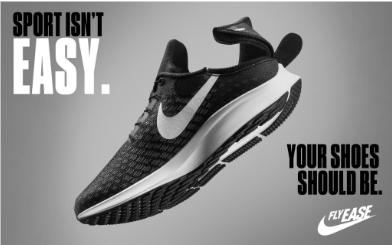
Many mainstream clothing brands have started adopting adaptive fashion, but this acceptance has fluctuated. Companies like Anthropologie and Nike have started lines with adaptive fashion in mind and received many positive reviews. For instance, Nike released the “FlyEase” sneakers, a shoe designed to be more accessible and more manageable for disabled individuals to put on and take off. It features a foldable heel and a zipper that can wrap around the shoe.
Another instance is Victoria Jenkins, who quite recently developed a collection of adaptable clothing at London’s Fashion Week, further highlighting the rise of versatile fashion. However, despite this progress, many challenges continue to prevail for adaptable fashion. The cost of production is very high, which can make the clothing more expensive for consumers, and limited consumer awareness creates more obstacles to the market. Multiple brands have been slammed for exploiting disabled consumers by making their prices significantly higher than clothing should be. To resolve these problems, brands must start incorporating inclusivity into their values, support more cost-effective ideas, and consult with disabled individuals to obtain a better understanding of their needs.
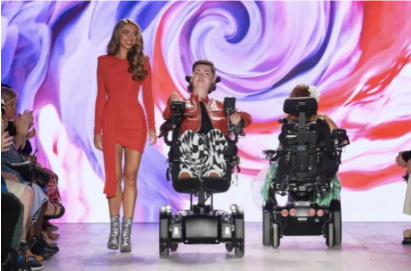
Adaptive fashion is not simply about clothing; it symbolizes a broader movement of inclusivity, generic beauty ideals are challenged, and diverse body types are placed in the spotlight. The “Double Take” adaptive fashion show in New York, meant to provide more visibility to those with disabilities, highlights how fashionable clothing and accessibility can exist concurrently. Aaron Rose Philip, an influencer who uses a power wheelchair, became a staple of New York Fashion Week, demonstrating how essential disabled voices are in the fashion industry.
The late Mama Cax, a Haitian-American model, disability activist, and survivor of cancer, is well known for breaking past the limitations invoked on her by walking the runway for brands like Savage X Fenty, confirming that versatile fashion can be both functional and aspiring.
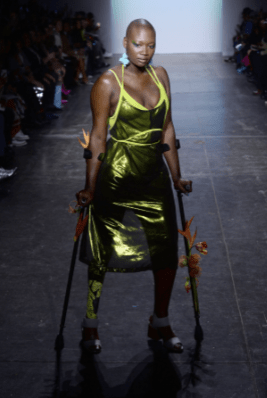
While the adaptive fashion industry is expanding, it still faces many limitations:
- High Production Costs: The specialized material needed to produce adaptive clothing makes it infinitely more expensive for customers.
- Little Awareness: Many people and clothing brands are not aware of the adaptable options they could provide.
- Exclusion in the Designing: Disabled individuals are often excluded from the design process, resulting in clothing that falls short.
To overcome these limitations, clothing companies need to integrate adaptive features into their products as a standard practice. The creative inventions of features like smart textiles and sensory-friendly fabrics, as well as the inclusion of individuals with disabilities, will help this rising industry become more inclusive.
Adaptive fashion has the possibility to change the current fashion industry by prioritizing accessibility and celebrating diverse body types instead of excluding them. While the present obstacles endure, the progress made further drives for a more inclusive future within the fashion industry. Welcoming more adaptive clothing designs can lead to a world where everyone feels confident enough to express themselves through fashion regardless of what their abilities may be. Adaptive fashion provides a means to fulfill the needs of disabled individuals and improve their experience in the clothing industry, making fashion more versatile, practical, and a model of the diverse body types and abilities within society.
References:
“Adaptive Fashion: Designing for Accessibility and Inclusivity.” Fashion Law Journal, www.fashionlawjournal.com/adaptive-fashion-designing-for-accessibility-and-inclusivity/. Accessed 6 Dec. 2024.
“Adaptive Fashion for Everyone.” Anthropologie, www.anthropologie.com/stories-adaptive-fashion-for-everyone. Accessed 6 Dec. 2024.
Alexiou, Gus. “Why Top Brands Should Rethink Adaptive Fashion and Take It Seriously.” Forbes, 18 Nov. 2022, www.forbes.com/sites/gusalexiou/2022/11/18/why-top-brands-should-rethink-adaptive-fashion-and-take-it-seriously/. Accessed 6 Dec. 2024.
“Aimee Mullins on Fashion and Disability.” Fashionista, 2018, www.fashionista.com/2018/02/aimee-mullins-fashion-disability-fit-symposium. Accessed 6 Dec. 2024.
Conlon, Scarlett. “The Magnificent Impact of Alexander McQueen SS99.” Another Magazine, 26 Oct. 2016, www.anothermag.com/fashion-beauty/9225/the-magnificent-impact-of-alexander-mcqueen-ss99. Accessed 2 Jan. 2025.
Kenion, Charisse. “A 90s Beauty Moment: Alexander McQueen’s No. 13 Show with Paralympic Athlete Aimee Mullins.” Charisse Kenion, 29 Dec. 2022, www.charissekenion.co/words/90s-beauty-moment-alexander-mcqueens-no13-show-with-paralympic-athlete-aimee-mullins/29/12/2022. Accessed 6 Dec. 2024.
“The Fashion Show.” Smamyway, www.smamyway.com/the-fashion-show/. Accessed 6 Dec. 2024.
“The Future of Adaptive Fashion.” Vogue, www.vogue.com/article/future-of-adaptive-fashion. Accessed 6 Dec. 2024.
Mullins, Aimee. My 12 Pairs of Legs. TED, www.ted.com/talks/aimee_mullins_my_12_pairs_of_legs/transcript?subtitle=en. Accessed 6 Dec. 2024.
Nike. “FlyEase Shoes.” Nike, www.nike.com/w/flyease-shoes-1eghpzy7ok. Accessed 2 Jan. 2025.
Pinto, Destiny. TikTok, @bydestinypinto, www.tiktok.com/@bydestinypinto?_t=8s04llFFuve&_r=1. Accessed 6 Dec. 2024.
Samyra. TikTok, @samyra, www.tiktok.com/@samyra?_t=8s04o8L8MU2&_r=1. Accessed 6 Dec. 2024.
Wong, Alice. Disability Visibility: First-Person Stories from the Twenty-First Century. Disability Visibility Project, 2020, disabilityvisibilityproject.com/book/.
Wong, Alice. Disability Visibility: First-Person Stories from the Twenty-First Century. Vintage Books, 2020.
Yotka, Steff. “Remembering Mama Cax, the Model and Activist Who Changed Fashion Forever.” Vogue, 20 Dec. 2019, www.vogue.com/article/mama-cax-model-disability-inclusion-acitivist-obituary. Accessed 2 Jan. 2025.


