
Written by A.C. for “Feminist Disability Studies”
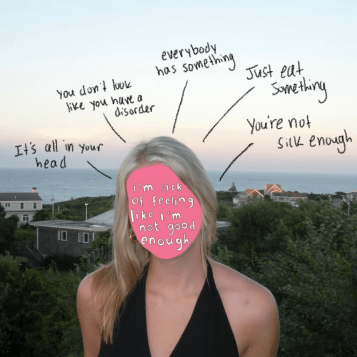
Eating disorders impact approximately 10-15% of the U.S. population, roughly 28.8 million Americans. Despite their prevalence, there is a noticeable absence of disability literature addressing eating disorders, highlighting a broader issue rooted in societal stigma and misinformation surrounding both these disorders and invisible disabilities. This scarcity contributes to the perpetuation of myths and stereotypes associated with eating disorders.
Societal stereotypes perpetuate harmful misconceptions, such as the belief that only certain demographics experience anorexia or that eating disorders are exclusive to one gender. Through personal experience in treatment, I observed a diverse range of individuals facing similar challenges to mine, each navigating their struggles in a unique manner. However, a lack of resources and information often hinders individuals from seeking treatment, leaving them vulnerable to societal judgments.
Despite the debilitating nature of eating disorders, society often fails to acknowledge them as disabilities, raising the question of why individuals with eating disorders are discouraged from considering themselves disabled? The lack of control over one’s actions, particularly the inability to “just eat,” underscores the complexities of these disorders. Individuals grappling with eating disorders often face a common challenge: the perception of not being “sick enough” to warrant seeking treatment or not fitting stereotypical images associated with eating disorders, paralleling the reluctance of individuals with invisible disabilities to identify as “disabled” due to societal expectations.
To comprehend these issues, it becomes crucial to scrutinize societal attitudes, cultural biases, and misconceptions contributing to the reluctance in recognizing eating disorders as disabilities. This examination is vital in fostering a more informed and compassionate understanding of the challenges faced by individuals with eating disorders and advocating for inclusivity, empathy, and support.
During my struggle with an eating disorder, I experienced a profound sense of not being in control, perpetually causing harm to my body. The intersection of self-harm and eating disorders often sparks controversy, particularly regarding the classification of eating disorders as a disability. Some may argue that individuals with eating disorders are intentionally inflicting harm upon themselves. While I, at times, felt as though I was deliberately hurting myself, these actions originated from a deep-seated self-loathing and a profound struggle with depression and anxiety. Ultimately the constant preoccupation with food and the internal turmoil associated with it made even simple daily tasks a struggle. This underscores the complex interplay between mental health challenges, self-perception, and the intricate nature of eating disorders, highlighting the need for a nuanced understanding and compassionate support for individuals navigating these multifaceted struggles.
Navigating an ongoing internal struggle centered around a fundamental aspect of survival, such as eating, unmistakably categorizes an individual as contending with an eating disorder. These thoughts and experiences resonate with the daily challenges encountered by disabled individuals, underscoring shared complexities and the pressing need for a more inclusive and empathetic societal approach. This approach aims to foster understanding and support for individuals grappling with these challenges. Recognizing that eating disorders are a form of invisible disability advocates for a shift toward a more compassionate and supportive environment. Such recognition acknowledges the diverse struggles individuals face on their journeys toward well-being, promoting a more empathetic and understanding society.

 Disability & Access Collective