
Written by Troy Guidone, with support from the DAC Team
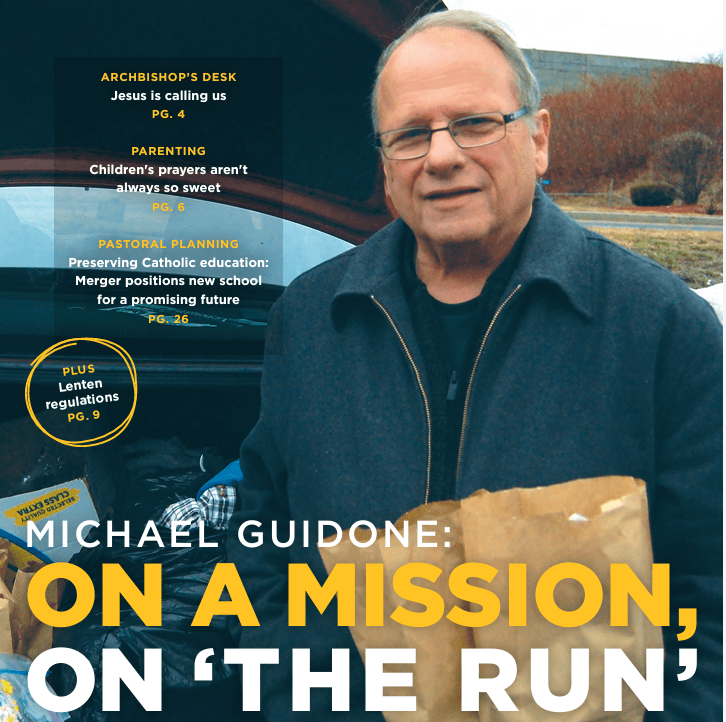
The image above is linked to a magazine with a feature story about one of my uncles who runs “The Midnight Run,” or maybe better put: “The Midnight Sandwich Run.” There is no running, however, and it doesn’t take place at midnight. But it is a good cause; he delivers warm clothes, toiletries, and food to the poor and homeless in New Haven, CT. He has done it for decades and there is still a demand–he makes multiple stops and there is always a line of people of all ages. He drives to different churches and volunteers’ homes to pick up donations and heads to places like the New Haven Green. By the time he finishes organizing the items, a line of people forms and more and more arrive by foot politely grabbing supplies and food to help them through the night and winter. Where exactly they come from, and how far they walk, I am not sure, but they know when to show up (and my uncle is always nervous he might be late).
I remember him speaking about how some of the homeless he serves on the outskirts of society used to be in institutions and that the government failed to provide enough alternative services for them once they closed. The article touches on this: “they handed out all the food, but they couldn’t feed everyone. Mr. Guidone knew he needed to keep coming back, because government was not doing the job” (20).
I offered this annotation about my uncle to connect with two of the class texts from the Disability Narratives graduate seminar I took with Brenda Brueggemann at the Bread Loaf School of English (Middlebury College, Vermont) in Summer 2023. It connects to the novel The Curious Incident of the Dog in the Night-Time and the film Crip Camp which prompted discussion about the idea of institutions and the benefits people with disabilities have access to. It reminds me of a comment Professor Brueggemann made about how the ending The Curious Incident of the Dog in the Night-time is a little over the top in the context of a young person aging out of the benefits that come when a child is born with a disability. We discussed how a person who acquires a disability from something like a car accident could have vastly more benefits than a person born with a disability, once they hit adulthood.
The article features Michael Guidone (with its own over-the-top ending) while in the backdrop are faceless, nameless people in need, many of whom might be disabled. It speaks to the extremes we’ve touched on in class, where people think someone who is disabled can do either nothing or anything. Our culture thought the disabled couldn’t accomplish anything, so we put them in institutions; now we sometimes act like people who are disabled (and their families) could do it all on their own; perhaps, this is how they end up homeless, on the outskirts of cities and towns, relying on volunteers with donations to supplement their lives.

 Disability & Access Collective